


Rome Woos Evangelicals
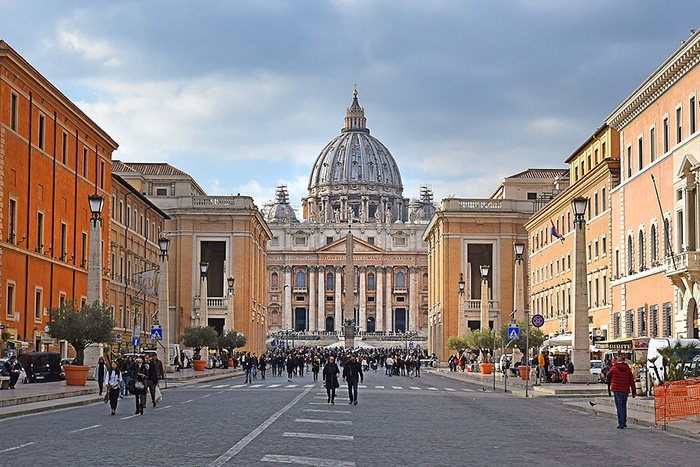
Rome has always pushed for ecumenical unity, but in recent years the effort has intensified. The Vatican—and even the White House—are speaking in ways that make many evangelicals say, “Maybe the Catholic Church isn’t so different after all.”
On November 9, Pope Leo XIV delivered a message full of phrases evangelicals instantly recognize: Christ as “the true sanctuary of God,” “the only mediator,” and “the only Redeemer.” He even acknowledged the church’s “frailties and mistakes.” It sounded humble. It sounded biblical. It sounded…almost evangelical.
But then came the pivot. Despite all the Christ-centered language, the Pope ended by urging people to “invoke Mary, Mother of the Church,” and ask for her “intercession.” For Bible-believing Christians who aren’t familiar with why this is significant: this is a spiritual role the Bible never assigns Mary—one that competes with Christ’s exclusive role as Mediator.
A White House Message More Catholic Than the Vatican
Then came the November 1 All Saints’ Day proclamation from the White House. It read like it came straight out of a Catholic missal.
Trump praised canonized Catholic saints and declared Mary—specifically the “Blessed Virgin Mary, Patroness of the United States”—as a national symbol of grace.
A decade ago, evangelicals would have raised eyebrows. A generation ago, they would have loudly objected. This time, many simply nodded along, missing the fact that these references are drawn directly from pagan-based Catholic theology, not Scripture.
In both messages, the same theme emerged: talk like evangelicals, then slip in Catholic doctrine.
Rome as a Unifying Voice
Pope Leo XIV is positioning the Catholic Church as the global voice of unity—warm, inclusive, Christ-sounding. And many evangelicals who once approached Rome cautiously now find themselves agreeing, appreciating, even admiring.
But here’s the issue: while the tone has changed, theology has not.
Rome presents itself as humble, reasonable, spiritual, and pushing for unity to draw wavering Protestants back into its fold. However, the Catholic Church has not renounced the unbiblical doctrines that the Protestant Reformers challenged. Papal authority, purgatory, indulgences, multiple mediators, and praying to and venerating Mary are all still present. They’re simply wrapped in friendlier packaging.
This Is a New Tactic
What many Christians don’t realize is that today’s soft, friendly outreach is a fairly new tactic in their Counter Reformation which began 500 years ago. After centuries of sometimes deadly persecution of Protestants and attempted destruction of the Bible, the Vatican in the 1960s launched a massive reversal of tactics.
The Jesuit order, created specifically for the Counter Reformation, became masters of persuasion, education, diplomacy, and cultural influence. Their strategy was simple: speak the language of the people you want to influence, adapt your tone, emphasize unity, and slowly draw them back under Catholic authority. This is the same pattern many evangelicals are now falling for.
How Quickly We Have Forgotten!
The Reformers didn’t rise up simply to rebel; they responded to centuries of doctrinal corruption and practices that opposed the gospel. Martin Luther nailed his 95 Theses to the church door in 1517 to call the church back to the authority of Scripture alone.
John Calvin and others sought to return worship and teaching to Christ alone, emphasizing salvation by grace through faith, not by works or human mediation. These men risked everything to insist that God’s Word—not an institution—must be the final authority.
Having Done All, To Stand
This moment calls for the same discernment the Reformers showed. Stay rooted in Scripture, letting the Bible alone define truth. Teach your family what God’s Word says about salvation, authority, and the Church so they can recognize the difference between Christ-centered doctrine and teachings added by human institutions. And just as the Bereans in Acts 17, examine the Scriptures daily to see what they teach.
- See more articles on related topics:
- Catholicism
- Ecumenism
- For Christians
- Counterfeit Church
Donations to the mission fund are processed for us by PayPal. You can use a credit card or PayPal account.
Please use the "Donate now" button below to be redirected to PayPal to make your donation by credit card or your PayPal account. Thank you!
Other Articles from January/February 2026:
More on Catholicism:
Products of Interest:
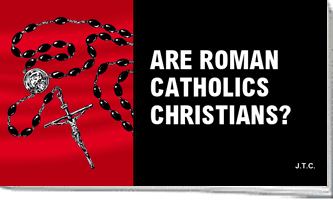
Are Roman Catholics Christians?
Show Catholics that neither their good works nor their religion can save them.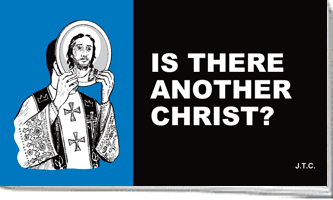
Is There Another Christ?
Have you ever been lied to? Millions have, trusting in "another Christ" to save them. The gospel for Roman Catholics.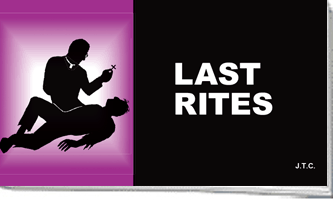
Last Rites
When this Catholic dies, he learns that his church couldn't save him.-
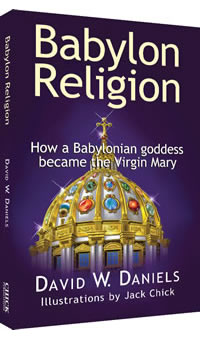
Babylon Religion
224 pages
Learn how a Babylonian goddess became the Virgin Mary. An easy-to-read history of Catholicism's Babylonian origin. -
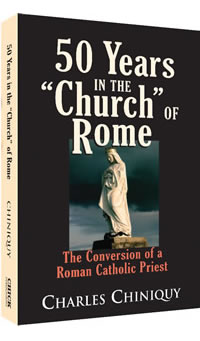
50 Years in the Church of Rome
368 pages
This classic work shows how this priest began to question Catholic teachings until he became saved, and led his entire parish to salvation. -
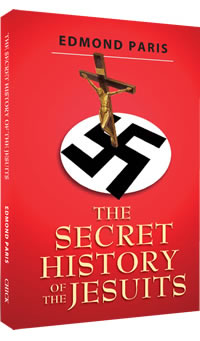
Secret History of the Jesuits, The
288 pages
Secular historian Edmond Paris reveals Jesuit secrets from the 16th century to World War II: (1) how they quietly gained high ranking positions, giving the Catholic church political dominance, and (2) cunning tactics they used in the past ... and still use today. -
Smokescreens
96 pages
Jack Chick shows that the ecumenical movement isn’t designed to bring all Christians into unity. That’s just a smokescreen, hiding the Vatican’s real intent, to stamp out religious freedom and rule the world. -
Night Journey From Rome
208 Pages
Former Catholic priest, Clark Butterfield, describes how he placed his faith in Christ alone, and left the Catholic church. A talented writer, he goes on to explain how the Scriptures disagreed with his church, and why he had to leave the priesthood. -
Understanding Roman Catholicism
224 pages
37 Catholic doctrines from the current Catechism are compared with the Scriptures. They're not Christian!