
Standing for Christ—Whatever the Cost
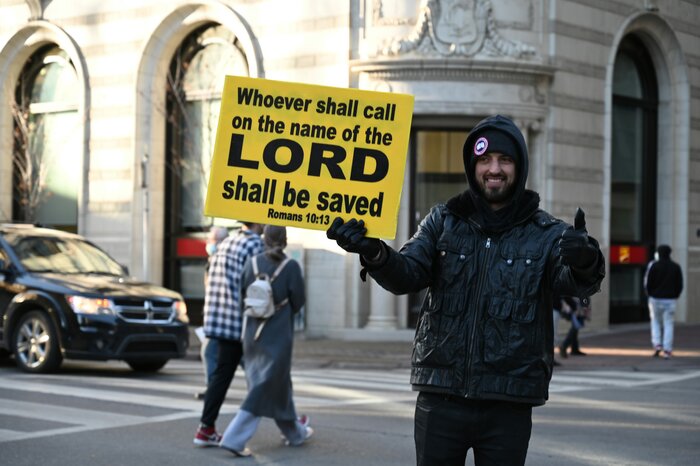
In Britain, 35-year-old Simeon Chandra put a simple message on the sides of his car using temporary tape. The message read: “Jesus loves you.”
When his insurance company found out, they demanded that he remove it. They also required a dated photograph proving it was gone if he wanted his insurance coverage to continue.
Chandra pointed out that all kinds of messages, flags and slogans are displayed on vehicles. “But when a Christian puts a peaceful message on his own car, suddenly it appears to become a problem.”
He is now receiving help from the Christian Legal Centre.
It may be tempting to look at a case like this and not see why it’s such a big deal. After all, no one put Chandra in jail. No one threatened his life.
But this is where religious freedom can begin to erode—when ordinary Christians are pressured to keep their faith out of public view. Christians should pay attention when simply identifying with Christ begins to carry a penalty.
In other parts of the world, that penalty is already much higher.
Pastor Wang Lin has spent nine months in detention in China with no hope of release.
Wang, who earned a Ph.D. in Old Testament theology from Wheaton College, returned to China in 2017 and became a leader of Beijing Zion Church.
In 2018, Chinese authorities officially banned the church, but believers continued meeting in homes and holding services online. According to Wang's wife, Su Ziming, the church refused to compromise its beliefs and continued shepherding its congregation according to the Bible.
Then, in October 2025, authorities detained 30 Zion Church leaders. While some have since been released, eight, including Pastor Lin, remained imprisoned.
Conditions inside the detention facility are harsh. Lin’s wife noted that 20 to 30 people may be packed into a single cell, with prisoners sometimes forced to sleep on their sides because there is not enough room. Food is poor, and everyone’s health has become a concern.
Though there is no end in sight for the eight in detention, the church faithfully prays for each person’s health, safety, and opportunities to share the Gospel.
For some Christians in Nigeria, the cost can be higher still.
The Fulani people are overwhelmingly Muslim, and Fulani militants have been responsible for brutal attacks against Christian communities in northern Nigeria. Yet something remarkable is happening among some Fulani themselves.
They are turning to Christ.
One man named Mohamed began questioning Islam while attending an Islamic school. Eventually, Christian friends told him about Jesus, and he met a pastor and trusted Christ.
When his mother found out, she handed him a poisoned glass of milk. He drank a sip and immediately became sick.
His mother left him in agony, telling him, “Let your God save you.”
When she later discovered that he was still alive, she threatened to shoot him. As he fled for his life, his brother fired the gun. Mohamed still carries the scar from the bullet that struck his leg.
Another young Fulani man, Amadu, became interested in Christianity and eventually trusted Christ. Knowing what his family might do if they discovered his conversion, he fled his parents' home. For Amadu, there was no option. “If my parents learned I became a Christian,” he said, “I will be killed.”
Today, Mohamed and Amadu are studying at a Bible college, preparing to become pastors and missionaries. After discovering Christ at tremendous personal cost, they are still preparing to take the Gospel back into places where following Him will be dangerous.
It’s easy to look at Christians suffering in China or Nigeria and think, “That could never happen here.” But religious freedom is rarely lost all at once. It can disappear one small step at a time.
China shows how far that road can go. Technology now gives governments an ability to monitor their citizens that previous generations could hardly have imagined. Cameras, facial recognition and massive amounts of data can make it increasingly difficult for Christians to meet or worship without authorities knowing about it.
Once religious freedom is gone, getting it back may be next to impossible.
This gives us another reason to use the freedom we still have. The Gospel should remain visible. Christianity has been woven into American life from the beginning, and we should not surrender its place in the public square.
One simple way to keep the Gospel in front of people is with Gospel tracts. Give one to the cashier. Leave one with a tip. Hand one to a neighbor. Offer one to someone you meet during the day.
Every tract does more than reach one person with the Gospel. It also keeps the message of Jesus Christ in public view.
We have the freedom to do that today. Let’s use it.
- See more articles on related topics:
- For Christians
- Evangelism
- Religious Freedom
Products of interest:
-
He Never Told Us (Retail)
If you're a Christian, will your friends say this about you? -
Letter, The
Mildred learns in a dream she wasn't a true friend. She never told Frances about Jesus. -
Last Call, The
64 pages
If you are serious about revival in your life, home, or church, this book is for you. -
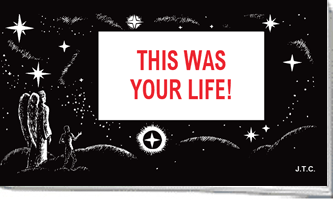
This Was Your Life
Most Popular Chick Tract! Everything you've said or done will be played back at judgment. Are you in the Book of Life? -

You Have a Date!
She had everything a girl could want. But she forgot that no one lives forever. The same message as the popular "This Was Your Life," but tailored for women. -
Love Story, A
Who loves you so much He gave you life and left heaven to die for you? It was Jesus! -
It's The Law
The Ten Commandments ... no one can obey them perfectly. That's why we need Jesus. -
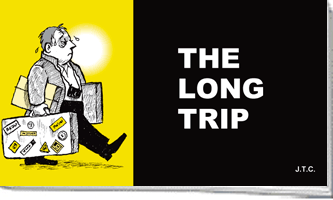
Long Trip, The
Life is a trip that will end up in one of two places...Heaven or Hell.